Dear children,

We read "The Gruffalo" together today and I think many of you enjoyed the story even though some had read it before. The mouse's idea was so brilliant, wasn't it?
As a class, I think your reading has improved a little since our previous reading. You sounded better varying your tone and I could see and hear that many of you really put yourselves into the shoes of the characters when you were reading aloud. Keep it up, 3/5! :)
As we read the book, we identified rhyming words and learnt new vocabulary like "logpile", "prickles", "treetop", "tusks", "underground" and "wart". On top of those, we also learnt other new words and phrases like "lure", "perch", and "the end of me" as we worked on a vocabulary exercise. You would also have learnt to use quantifiers like "much", "a few", "a lot of", and "any", and revised the use of the demonstrative pronouns "this", "that", "these", and "those".
Did you know there is an interesting website that is all about the Gruffalo? Click here to explore it with your parents:

During Science lesson, we made our way to the Science Laboratory for the first time. You were so excited about it that many of you could not control yourselves. I expect better behaviour for future lessons at the Science Lab. We will be working on experiments when we go there more often next term. Good scientists must practise self-discipline.


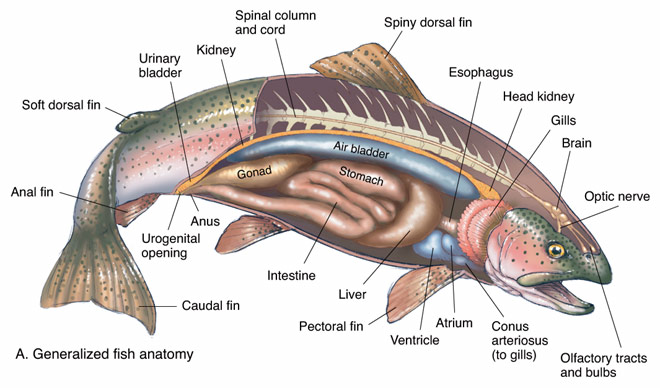
I hope today's activity helped you to remember some important facts about insects and fish. Try answering these 8 questions on your own:
1) What are the three main parts of an insect?
2) How many pairs of legs does an insect have?
3) How many pairs of feelers does an insect have?
4) On which part of the insect are the legs found?
5) On which part of the insect are the feelers found?
6) What covers a fish's body?
7) Which part of a fish helps it to breathe?
8) Which parts of a fish help it to swim?
These are today's reminders:
1) Bring your "Oral and Listening Comprehension Booklet" tomorrow. We will be working on a Listening Comprehension exercise.
2) If you have not bought a third exercise book to be used for English journal writing, please do so by Friday. You will be writing your first journal entry as homework for this weekend. I will tell you more about your task on Friday.
Have an enjoyable evening with your family. See you tomorrow! :)


Hi
ReplyDeleteAlden
Mr Wong,
ReplyDeleteCan I use Jotter book instead of exercise book???
Kaedee
Hi Kaedee, please use an A5 lined exercise book as mentioned to you in class. I would like the whole class to be using the same type of book.
DeleteMr Wang,can i use the fatter lines exercise book??
ReplyDeleteMr Wong,
ReplyDeleteCan I use my home A5 book???
Shi Yu Qi
Hi Yu Qi, please use an SHPS one.
DeleteHi Mr Wong,
ReplyDeletePlease clarify the following:
(1) When I poked one side of the fish's eye, why did the opposite side of the eye pop up?
(2) Did the fish's tail feel dry because it was dead?
(3) When I removed a scale, why didn't the fish's body bleed?
(4) What are the names of the fishes?
Thank you very much.
Thaneeisha Bath